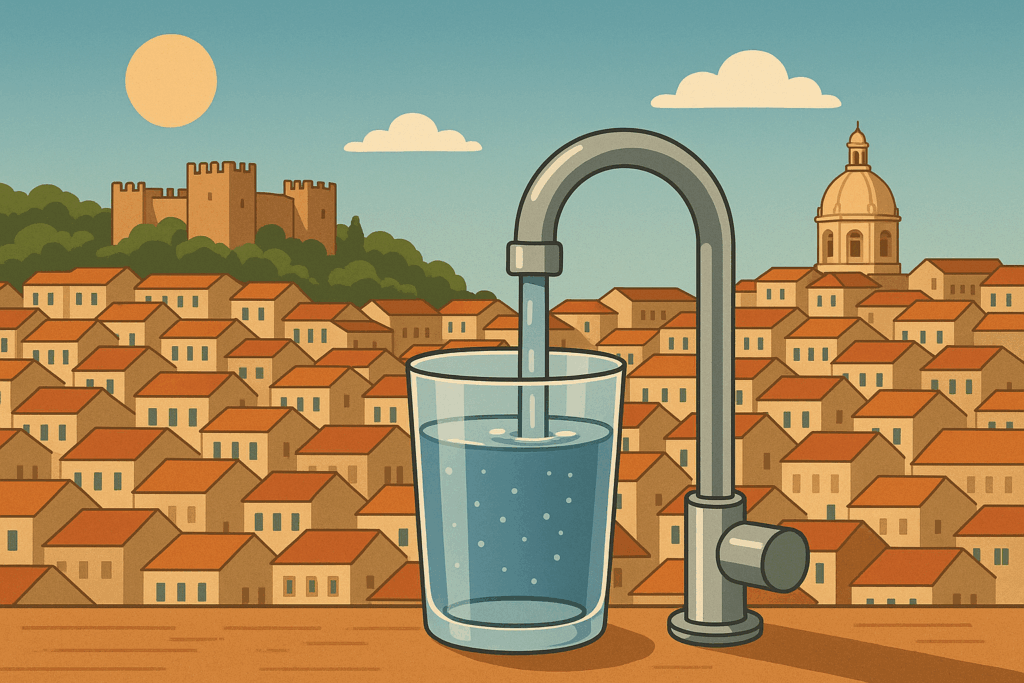
One of the most common questions travelers ask before visiting Portugal is: “Can I drink the tap water in Lisbon?” The answer is simple: yes, the tap water in Lisbon is perfectly safe to drink. Portugal, and especially Lisbon, has very high standards when it comes to water treatment, and the city’s supply is regularly monitored to ensure safety. For locals, it is completely normal to drink straight from the tap, and you will see restaurants offering tap water if you ask for “água da torneira.”
Where Does Lisbon’s Water Come From?
Lisbon gets its water primarily from rivers and reservoirs located in central Portugal. The Tagus River basin is one of the main sources, and water is carefully treated before it reaches homes and hotels. The water passes through modern purification plants where it is filtered, disinfected, and tested to meet both Portuguese and European Union safety standards. This means that when you fill your glass in Lisbon, you are drinking water that is subject to strict quality controls and frequent analysis.
Does the Water Have a Special Taste?
While the water is safe, some travelers notice that Lisbon’s tap water has a slightly different taste compared to what they are used to back home. This often comes from the mineral composition of the soil and reservoirs, and sometimes a light chlorine flavor from the disinfection process. For most people, this is hardly noticeable, but if you are particularly sensitive to taste, you might prefer to use a reusable bottle with a built-in filter or opt for bottled water, which is widely available and inexpensive.
Can Sensitive Stomachs Handle Lisbon Tap Water?
For the vast majority of visitors, Lisbon tap water causes no problems at all. However, if you have a very sensitive stomach or a condition that makes you cautious about water abroad, you may want to start slowly. Sometimes, it is not the bacteria (since Lisbon water is disinfected and bacteria-free), but simply the unfamiliar mineral content that can make digestion feel different at first. In these cases, bottled water can be a good temporary alternative until your body adjusts.
Staying Hydrated in Lisbon’s Summer Heat
Lisbon is famous for its hills and sunshine, but that also means you need to pay extra attention to hydration. In July and August, temperatures often rise above 30°C (86°F), and the combination of steep climbs, narrow streets, and sightseeing can make you sweat quickly. Doctors generally recommend drinking about 2 liters of water per day, but when walking up and down Lisbon’s hills in the summer, you should aim for 3 liters or more, especially if you are outside during the hottest hours of the day (12:00–16:00). Always carry a reusable water bottle with you; many public fountains around the city provide safe, drinkable water to refill your bottle for free.
What Else to Drink in Lisbon?
Of course, you may not always want to drink plain water. Luckily, Lisbon offers plenty of other refreshing options:
Fresh juices and smoothies: Many cafés in Lisbon serve freshly squeezed orange juice, smoothies, and seasonal fruit juices. Portugal’s oranges are famous for their sweetness, so don’t miss trying one of these natural drinks.
Coffee: Portuguese coffee is strong, aromatic, and part of everyday life. Order a “bica” (Lisbon’s version of espresso) for a quick pick-me-up while sightseeing.
Local wines: Portugal is one of Europe’s most celebrated wine producers. Lisbon itself has excellent regional wines, and enjoying a glass of white vinho verde or a robust red from Alentejo is part of the cultural experience. Just make sure to alternate with water to stay hydrated!
Ginjinha: This cherry liqueur is a Lisbon specialty. Served in tiny cups, it’s sweet, strong, and perfect for tasting Portuguese tradition.
Beer: Local beers such as Sagres and Super Bock are refreshing on a hot day, and you’ll find them everywhere from corner kiosks to waterfront restaurants.
Conclusion – Tap Water and Drinks in Lisbon
In short, Lisbon’s tap water is safe, clean, and perfectly fine to drink, though some visitors may notice a slightly different taste. If your stomach is particularly sensitive, you can always choose bottled water in the first days, but for most people, there are no issues. During the hot summer months, staying hydrated is key, especially when exploring Lisbon’s famous hills. Alongside water, make sure to try Lisbon’s wide variety of drinks – from fresh juices and strong coffee to local wines and ginjinha. Drinking water is essential, but in Lisbon, enjoying what else is in your glass is part of the adventure.
For more inspiration on your trip, check out the Lisbon Guide, discover the city’s upcoming events, and explore the best Lisbon attractions.